AI Video & Localization Pipeline
Turn recordings and documents into videos people use
Turn approved ideas, recordings, and documents into videos people can use. We build a repeatable process for explainers, training, onboarding, and marketing content, with captions, translations, or dubbing where needed. We agree the terminology, review responsibilities, and approval steps before production begins.
Does this sound familiar?
- We have hours of recorded webinars that nobody will sit through again.
- Our training is a long PDF that new staff skim on their first day.
- We need French versions, and paying for full translation on every update is out of reach.
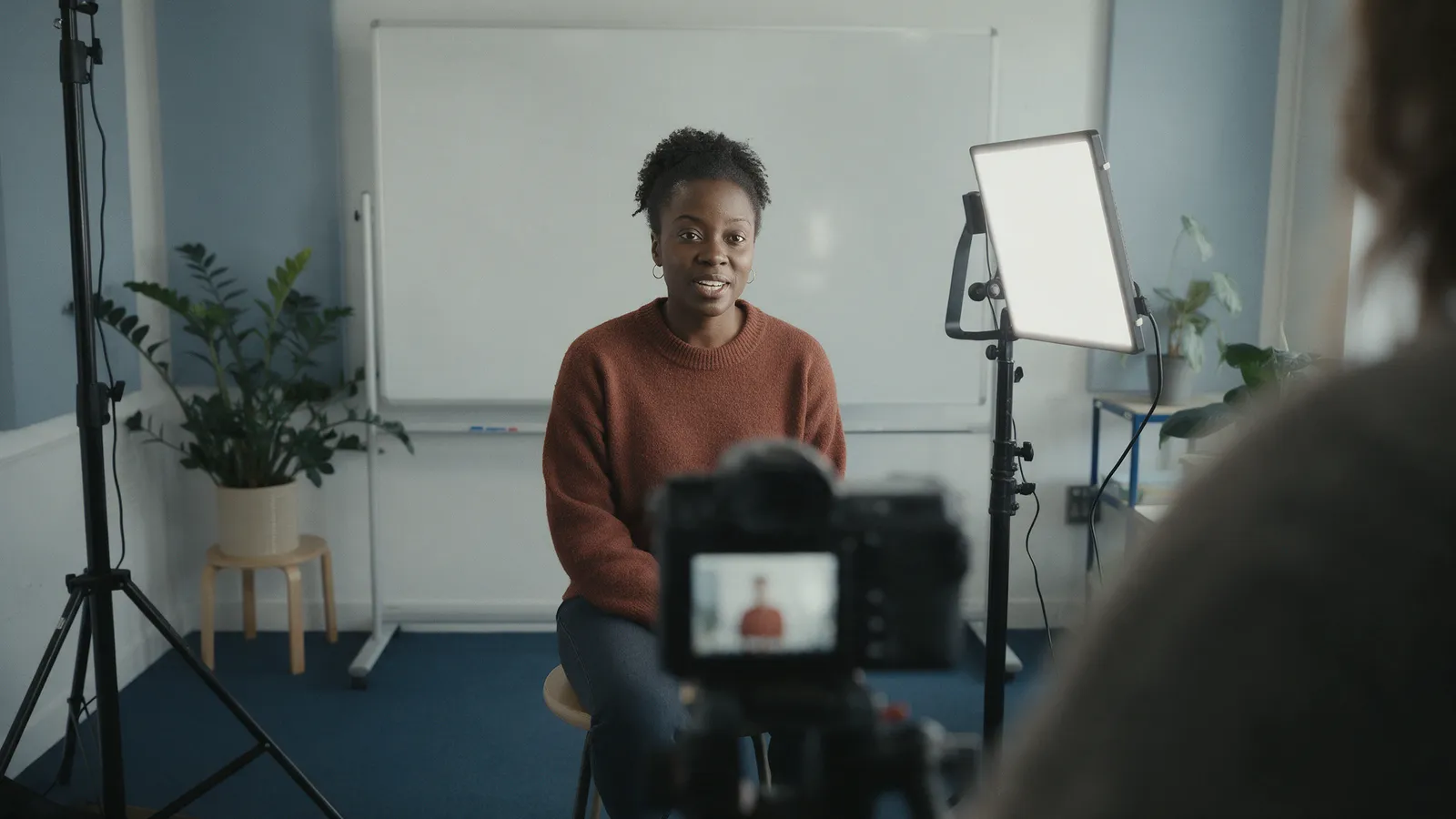
- Every video takes weeks because filming depends on one busy person.
- Our videos have no captions, and we know that shuts people out.
Illustrative example · National industry association
A trade association with nine staff trains members on new safety and reporting rules. Members have asked for short videos in English and French.
Before
- Training lives in long webinar recordings on the members' site.
- French versions come out months later, if at all.
- Updating one rule means re-recording a whole session.
After setup
- Each webinar is cut into short topic videos from scripts staff approve.
- French subtitles and voice versions follow an agreed glossary, and a French-speaking reviewer signs off each one.
- When a rule changes, only the affected clip is updated and re-exported.
How it works
- 1
Agree the purpose and the rules
We decide who the videos are for, the formats and languages, the terminology glossary, and who approves scripts and translations.
- 2
Audit your source material
We go through recordings, slides and documents to find what can be reused, what needs rewriting and what's out of date.
- 3
Build the production process
We set up scripting, voice, editing, captions and translation, then produce a first batch so your reviewers can test the approval steps.
- 4
Review and refine
We look at turnaround time, reviewer corrections and viewing numbers, then adjust the glossary, templates and steps.
Your project can include
- Scripts
- Video production workflows
- Repurposed clips
- Subtitles
- Translated versions
- An organized content library
What you bring
- Existing recordings, slides or documents to work from
- A subject expert who approves scripts for accuracy
- A fluent reviewer for each language, on staff or contracted
- Your brand guidelines and any required terms or disclaimers
- Written consent from anyone whose voice or likeness is used
What we handle
- Scripts drafted from your source material
- Editing, captions and on-screen text
- Translated subtitles and, where suitable, AI voice versions
- A terminology glossary for each language
- An organized library with clear file names and version history
- Templates so your team can produce simple videos later
What this is not
- AI translation needs review by a fluent person, especially for legal, health or safety content. We build that step in and don't skip it.
- We won't clone anyone's voice or face without their written consent.
- AI voice and avatar video suits training and explainers. For a brand film or a personal message from your director, a real shoot is usually the better choice.
Tools we often work with
We start with what you already pay for. These are common, not required.
- Descript
- ElevenLabs
- HeyGen
- Synthesia
- DeepL
- Adobe Premiere Pro
- CapCut
- Canva
- Vimeo
- YouTube
How we usually work on this
Build & Hand Over suits a one-time batch, such as converting a training library. For a regular flow of new videos and translations, a Managed Service gives you a set schedule and review process.
Ways to work togetherQuestions about video & localization
Will the AI voices sound robotic?
Current AI voices work well for training and explainer content. They are weaker at emotion, humour and unusual names. We test samples with you before production starts, and we use real voice recordings where the content needs a human tone, such as a welcome from your director.
Can you translate into French for Canadian audiences?
Yes. We set the target as Canadian French, build a glossary of your terms, and require a fluent reviewer to approve each version. Machine translation gives a fast first draft. The reviewer catches wording that is technically correct but wrong for your members or clients.
Do we need to film anything?
Not always. Many videos can be built from existing recordings, screen captures, slides and AI voice. Some content works better with a real person on camera. We'll tell you where filming is worth the effort and where it isn't, before production starts.
Who owns the videos?
You do. Final files, scripts, subtitle files and the glossary are delivered to your storage. Some tools, such as avatar platforms, have their own licence terms for generated voices and likenesses. We explain those terms in the proposal.
How much does it cost?
Pricing is scoped per project, or as a monthly managed service if you need a regular flow of videos. The proposal lists our fees and, separately, software subscriptions and usage costs such as voice or translation credits. Contracted translators, if you use them, are a separate cost too.
Make your content work across formats and languages. Tell us where it gets stuck.
Tell us what you are working toward and what keeps getting in the way. We will help you identify a practical next step.
Start with what you want to achieve
You can describe the problem in your own words. We will work through the possibilities together.